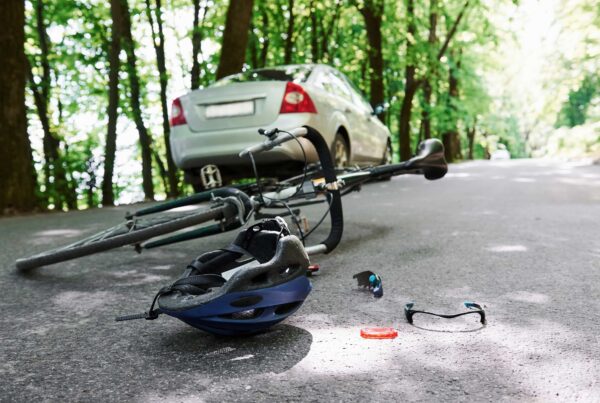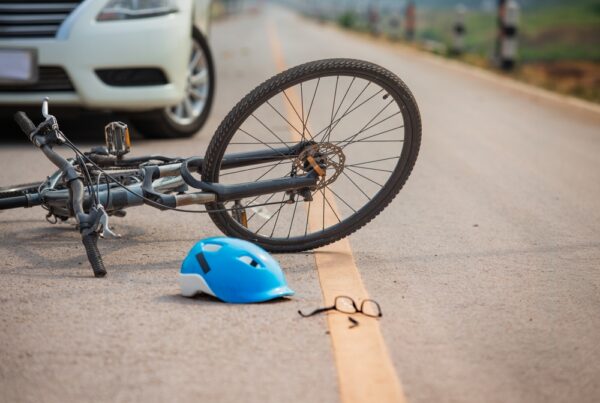
After a skidding jeep slammed into 21 year-old Joshua Clark, sending him to the hospital with a possible head injury, the Durango, Colorado police indicated that they would probably not issue a ticket to Clark, who they determined to be at fault, explaining that “he’s going to have some tremendous hospital bills.”
Without a doubt, the Durango Police thought they were doing the injured cyclist a favor. And if Clark had been breaking the law, they would undoubtedly be doing him a favor. But was he breaking the law?
I have my doubts.
As the Jeep driver and a couple of other independent witnesses explained, on the evening of April 23rd, Clark “came up to the pedestrian crosswalk paused, then for whatever reason, rode his bike into the crosswalk and oncoming traffic.”
According to the police, this was illegal:
“Because he was riding his bicycle in the crosswalk instead of walking, he’s at fault for failing to yield,” [Sgt. John] Ball, the patrol supervisor, said about Clark. “We probably won’t cite him because he’s going to have some tremendous hospital bills. If he had dismounted and walked, he would have been entitled to all the privileges of a pedestrian, but when you ride in a crosswalk, you’re at fault.”
So, according to the police, if Clark had dismounted and walked across, he would have had the right of way, and the approaching drivers would have been required to yield to Clark. It was only because he rode across the intersection in the crosswalk that police alleged that he was at fault for failing to yield. And thus, because Clark failed to yield, and “rode his bike into the crosswalk and oncoming traffic,” the approaching Jeep skidded 50 feet before slamming into Clark in the crosswalk.
Call me a skeptic. I thought I’d take a look at Colorado law to see if it’s really true that cyclists have to dismount and walk in the crosswalk. And what do you think I found? There is no such requirement in Colorado law. In fact, the law allows cyclists to ride in the crosswalk unless local law or an official traffic control device prohibits it.
Well, OK, I thought, maybe it’s against the law in Durango to ride in the crosswalk.
Nope.
Completely legal, unless an official traffic control device prohibits it.
So I took a look at the intersection, courtesy of Google Street View. Maybe, I thought, there’s a posted sign requiring cyclists to dismount and walk across the intersection.
Again, no.
But there are posted signs requiring drivers to yield to persons in the crosswalk.
And yet police decided that the cyclist was at fault for violating a law that doesn’t exist—and then gave him a break by not giving him a ticket.
Of course, what we’ve heard so far is the driver’s account. And that’s all we’re likely to hear. As Sgt. Ball explained, “the bicycle rider got his noggin thumped and didn’t remember what had happened.”
But there’s one more interesting analysis that might help to shed some light on what happened. Commenting on the collision, a Durango Herald reader who identifies himself as a former automotive engineer claims that the skid mark indicates that the driver was “doing closer to 50mph than 35mph,” and argues that the Durango Police need to investigate the skid mark more thoroughly. “If they can’t produce a 50 foot skid from a Jeep doing the 35mph speed limit, then the driver should be cited for excessive speed,” the reader asserts. “No cyclist intentionally endangers their own life by pulling in front of a speeding car,” he continues. “[The driver would] have to be significantly over the limit for a cyclist to so badly misjudge the time available to cross.”
This is exactly right. But before the Durango Police can conduct a proper analysis of what happened, they first have to stop clinging to a law that doesn’t exist.